Wednesday, March 16, 2016

Having Walked Every Road...

Having walked every road in Maynard, I can report from personal observation a range that stretches from imaginary though abandoned, unpaved, unaccepted, in poor repair, all the way to really new (with or without new sidewalks). Likewise, street name signs range from non-existent to really old, to just old, to newish - but still not up to code.  
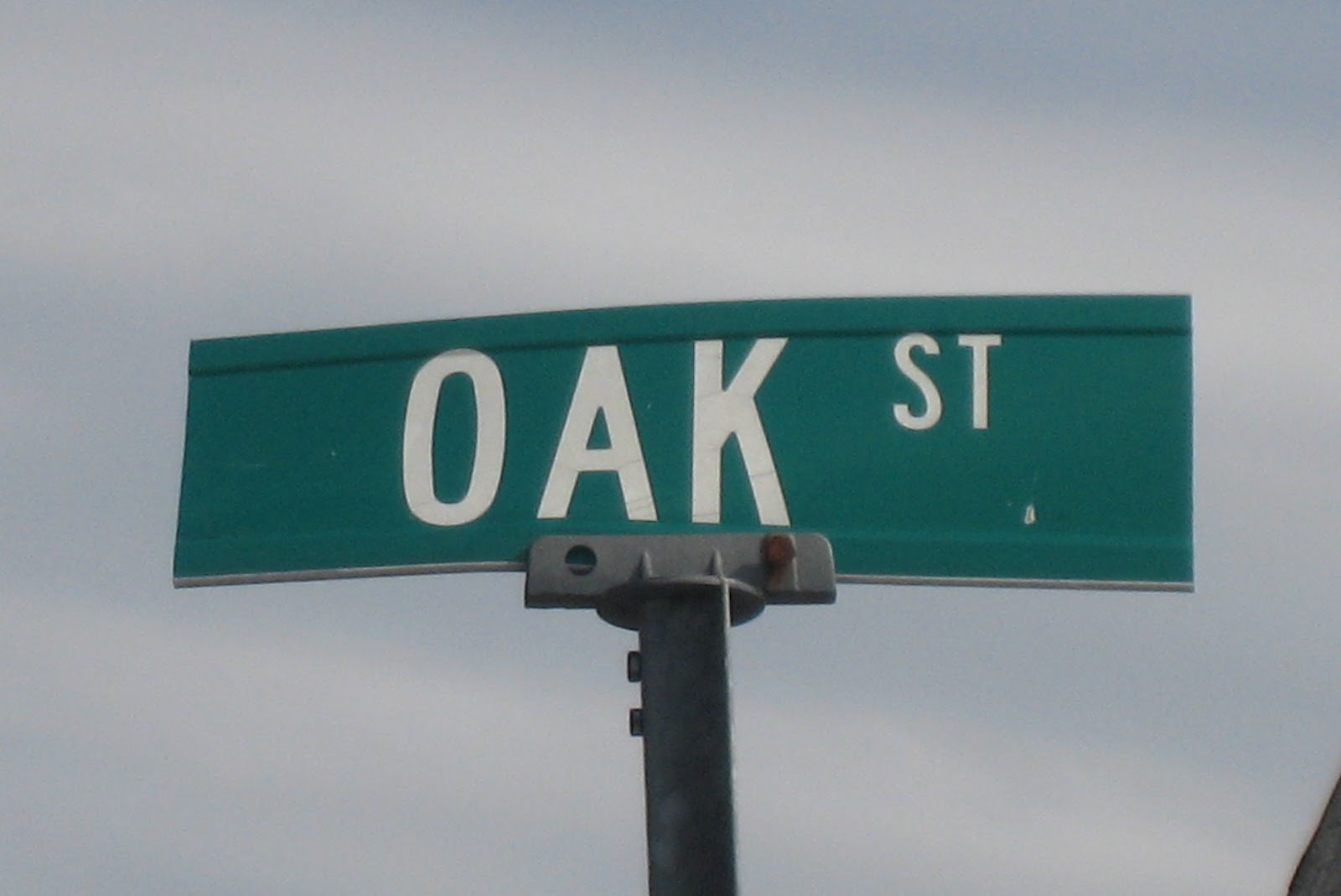
As a side note, of the 25 street names most commonly found across all 351 towns and cities of Massachusetts, Maynard matches for 18, including the top five (Maple, Park, Pine, Pleasant, Oak) and three of the next five: Elm, Main and Lincoln but not Highland or Cross (although Mill Street was Cross Street back in 1887). At least one street name - Guyer Road - is unique to Maynard.

According to a recent survey of all roads in Maynard by Beta Group, a consulting company, the totals came to 41.32 miles of accepted roads, 14.57 miles of unaccepted roads and 0.40 miles of state-owned roads, for a total of 56.29 miles. I believe this total does not include private roads nor roads that were abandoned, examples of the latter being roads that existed in land taken by the U.S. Army in World War II, currently incorporated into the Assebet River Wildlife Refuge.

Reasons for the survey were to evaluate whether unaccepted roads - currently not maintained by the Town - could be brought up to code and accepted, and to develop a three year plan for road and sidewalk repair and resurfacing. It is also important that the MA Department of Transportation concur with the Town on number of miles of accepted roads, as that dictates state funding aid for road repair.  

A problem with using a map of Maynard to research roads is there is no single, completely correct, map of Maynard. The last commercially printed atlas of Middlesex County, one town per page, showing all streets in each town, was published in 2003. That one included streets that existed only on paper - the never-built 42nd Street among them - and obviously did not include streets built since then, such as Karlee Drive or Keene Avenue.

E-maps, although continually being updated, do not always agree with reality or each other. In real life Maynard has a Latta Lane, off Waltham Street, but neither Google Map or Mapquest think it exists. Meanwhile, both show Puffer Road but only Mapquest names it (it's abandoned).   
  
Street sign in compliance with almost all of the regulations
(should be upper and lower case in Highway Gothic)
And now, to move our focus from an obscure to an abstruse topic, none of the street name signs in Maynard comply with current state regulations. State code calls for street signs to be adequately reflective and with lettering in upper and lower case Highway Gothic typeface. On major streets the lettering to be six inches for the capital letters and 4.5 inches for the rest. Side streets can use lettering 2/3 those sizes. All signs to have rounded corners, white borders, white lettering and green background. Inclusion of a town seal is optional. As Maynard's signs - even the newest - use all capital letters, every one must in time be replaced. [2018: a few signs converted to upper and lower case lettering.]   

Street name for Route 27, up
by Christmas Motors
Some replaced sooner than others. All street name signs are required to meet minimum reflexivity standards by the end of 2018. Roughly half of Maynard's street signs are relatively new, bear the Town Seal, have six inch all upper case lettering in Clearview typeface and are adequately reflective. The other half are not in compliance, as they are a mix of faded, smaller, sharp-cornered, lacking white borders, and in a handful of locations sport black lettering on a white background - a style dating back 40 years. Another handful of streets lack any sign whatsoever. Example: Shore Avenue.

Big oops! After years of research a federal recommendation was made in 2004 to switch from Highway Gothic typeface to Clearview - supposedly easier to read.  And then, in February 2016, the federal government rescinded its order, reverting to Highway Gothic. Turns out the original comparison research was flawed, in that it had compared brand new signs in Clearview with existing signs in Highway Gothic. The legibility difference was due to fade, not font. For some types of signs Clearview is actually harder to read at night.

NOT IN THE NEWSPAPER ARTICLE

Named streets with no signs (updated January 2018)Fifth Street, Florida Court, Heights Terrace, Shore Avenue (only sign is in Stow), Sudbury Road (only sign is in Acton), Tower Road (dirt road to water tanks), White Pond Road (only sign is in Stow).

Old street sign: black letters on white background
Private roads to condominium and apartment complexesApple Ridge, Assabet Place, Deer Path, Hemlock Lane, Marble Farm Road (has a Town sign), Oak Ridge (has a Town sign), Stonebridge Narrows and Summerhill Glen.

Named and on some maps, 
but do not exist42nd Street, 12th Street, Bluff Avenue, Fourth Street, Greenhalge Street, Harvard Road, Jeffery Drive, King's Lane, Lenox Avenue, Lowe Road, Noble Park, Oldfield Way,  Puffer Road (abandoned).... And a proposed development that never made it to a map: a 1934 plan shows the south side of Summer Hill, to be accessed off Summer Hill Road, to be divided into some 60+ lots on proposed streets Arbor Way, Border Road, Governors Avenue, Pleasant View Road and Rural Avenue, Came to naught. Land is now a combination of Conservation land and Municipal land.

White signs with black letters (as of March 2016): Boeske Avenue, Dartmouth Court, Guyer Road, Reo Road and Winthrop Avenue.

Acton and Concord have begun to install signs in upper and lower case lettering. Interestingly, in the South Acton Historic District, the signs have a black background instead of green. 

Wednesday, March 2, 2016

Black Squirrels in Masschusetts

Eastern gray squirrel (internet downloaded photo)
There are 285 species of squirrels in the world, ranging in size from African pygmy squirrel to Alpine marmot - a ground dweller about twice the size of its American marmot relative, the woodchuck. The extended family includes about 45 species of flying squirrels and 15 species of marmots.   

Eastern Massachuetts is host to five species, in size from smallest to largest: eastern chipmunk, southern flying squirrel, red squirrel, gray squirrel and woodchuck. Each of these occupies an overlapping ecological niche, so they co-exist without competing too much for habitat or food. Two hibernate (chipmunk, woodchuck), while the other three get by on a combination of cached food and what can be found in winter - nuts and seeds, but also leaf buds at the tips of branches.

North American red squirrels are 1/2 to 2/3 the size
of gray squirrels (internet downloaded photo)
Over-wintering gray squirrels create insulated nests either by making a leaf ball in the fork of a tree (the structure is called a drey) or inside a hollow tree trunk. Or inside an attic, which for them is squirrel heaven - warm, dry, safe from predators, and if they get bored, there may be electric wires to gnaw on. Each year, thousands of building fires are attributed to squirrels, rats or mice gnawing on wiring. Anyone suspecting they have a squirrel problem should contact a professional pest control company without delay.      

The eastern gray squirrel species comes in three color variations: gray, black and in-between, the last from getting genes from one gray and one black parent. Black is more common in the deep woods of northern U.S. and Canada, while the gray coloration prevails in less wild territory. The thinking is that color helps squirrels avoid predation by eagles, hawks and owls - black better in the shadows of deep forest while gray preferred in terrain with more daylight.
Woodchuck. Although they are ground and underground
dwellers, can also climb trees. Click on photos to enlarge

Individuals do not appear to show a mating preference based on color. Yet there are examples of black replacing gray in suburban areas. There is speculation that in addition to the camouflage benefit, black squirrels displace gray squirrels because of more aggressive behavior, or because genes adjacent to the color genes code for a more effective immune system, or because dark hair helps capture more heat from winter sunlight, thus helping with survival. None of these theories have been proven or disproven.         

The gray of a gray squirrel is actually a mix of colors. Each hair follicle starts hair growth, continues for a set period, then stops. After a while the hair detaches and the follicle starts again. The process is ongoing all year, but there are bursts of hair growth in the fall, to create a warmer winter fur, and again in the spring when the winter coat is shed. Each hair starts growing as white (without melanin color). Stomach hairs stay white. As face, back and leg hairs continue to grow, most of the follicles will change to producing a brown/orange tone or else black. The combined effect is a gray coat, but with brown/orange tones more evident on face and tail. A mutation in the DNA that codes for control of hair color causes all hair to start as black and stay black, resulting in all-black squirrels.
Black variant of eastern gray squirrel (internet downloaded photo)

Gray squirrels are predominant in most of Massachusetts. However, Westfield, MA, a bit west of Springfield, was the site of a deliberate introduction of black squirrels about sixty years ago. The founder population of less than a dozen proved to be successful, as part of central Massachusetts as far away as Amherst now have a sizable black squirrel populations. Sightings are rarer farther east, but there are many confirmed sightings in Stow and in Maynard (the latter, most recently behind buildings on Railroad Street).

Other mammal species have black variants. The South and Central American jaguar has a yellowish/brown coat with dark blotches, but about five percent have a near-black melanism and are known as black panthers. (Interestingly, the North American cougar, also at times referred to as a panther, does not have a melanistic variant.) North American gray wolves also exhibit melanism.

For both predators, the darker color is linked to better hunting success from better camouflage. Dark wolves are more common is deep forest and less common in tundra or broken forest habitat. While wolves do not (presently) inhabit Massachusetts, it's nice to be able to see a black squirrel in Stow or Maynard and be reminded of the larger world.

And if one was living in India, might perchance spot a
Malabar giant squirrel - weight about four pounds, nose
to tip of tail exceeding three feet. (internet photo)
 Squirrels are omnivores. In addition to nuts, seeds, leaf and flower buds, squirrels also eat insects, bird eggs, baby birds, etc. Winter storage of food - primarily nuts and bulbs - is by scattered hoarding. This means each item buried individually, but within the territory of the squirrel. Recovery is by remembering the general area and then using sense of smell to decide where to dig. In contrast, chipmunks do cache hoarding, with large amounts of seeds stored in one place. Squirrels will dig up and rebury small flowering bulbs such as crocus and snowdrop, but usually do not dig deep enough to get to tulips and daffodils. American gray squirrels are an invasive species in England, Ireland and parts of continental Europe - displacing the native red squirrels through a combination of competition for food and introduction of squirrelpox virus.

P.S.  'Gray' is the preferred spelling in the U.S. while 'grey' is preferred in Europe.    

Wednesday, February 3, 2016

Making Maple Syrup, Maynard MA

Maple sap collecting buckets are obsolete. Operators now create a web
of tubing connected to a vacuum pump = cleaner and less labor. 
Daytime temperatures above freezing followed by nights below freezing are optimal to promote and prolong the maple sap season, which typically lasts 4-6 weeks. Each tap into a tree is expected to generate 8-12 gallons. New tap holes are drilled each year because the tree reacts by clogging the area around the tap in an attempt to heal itself from the damage.

What is collected is about two percent sugar, processed to concentrate it to 67 percent, meaning that it takes about ten gallons of sap to make one quart of syrup. The tree species of choice is sugar maple (Acer saccharum, also known as rock maple) followed by black, red and silver maple. Sugar maples are preferred because of higher percent sugar in the sap and more sap yield per tree.

Locally, climate change is affecting the maple syrup industry.  The season tends to start 10-15 days earlier than it did decades ago, and of greater importance, is becoming shorter. Toward the end of each sap season the resultant syrup is darker and has a maple taste too strong to be sold as pure syrup. Instead it is used as flavoring for stuff like barbeque sauce.

Tubing gravity-feeds into a stainless steel container. Contents periodically
pumped into a tank on a truck to be transferred to a 'sugar shack' for 
concentration via reverse osmosis and heat evaporator.
With the advent of nights with above freezing temperatures the leaf buds begin to open and the sap develops a bitter off-taste referred to as "buddy" syrup. Sap collection stops when this starts. This week's prolonged warm weather may have been enough to trigger bud break, so that even if February gets cold again, this may be a lost year.

Expert advice on tree tapping is consistent - to harvest without causing harm do not tap trees under 10 inches in diameter, do not add a second tap until diameter exceeds 17 inches, and only go to three (and never higher) when trees exceed 25 inches in diameter. Some maple sugar operations are switching to a smaller diameter tap and not drilling as deep (5/16 and 1.5 inches versus 7/16 and 2.0 inches) and experimenting with tapping smaller trees, but there is not enough long-term experience to determine if the smaller taps mean that smaller trees stay healthy over years of use.  

Tap on too-small maple tree (Click on photos to enlarge)
In Maynard, most of the tapped trees in the woods south of Concord Street Circle are under ten inches in diameter; many are well under six inches. The practice risks doing trees grievous harm. Premature tapping and over-tapping (too many taps per tree) slows growth. It also weakens trees, putting them at risk for disease and rot. 

One newish question is how "green" the maple syrup industry can become. The old bucket methods have been superseded by networks of plastic tubing that connect trees to collection tanks. The process is either gravity driven, or else hooked up to pumps. Studies have also shown that plastic tubing will produce higher yields of cleaner sap and greatly reduce the labor involved with sap collection.

At the sugarhouse, the maple sap is run through a reverse osmosis system which removes about 80% of the water. Although the concentration process is still completed via an evaporator, using the osmosis process first saves lots of fuel. Evaporators can run on gas, oil or wood. Burning wood will put more carbon and smoke into the atmosphere, but it has the benefit of being locally sourced. And free.

The newest fad is to skip any concentration process entirely, and market "maple water," i.e., pasteurized maple sap. The taste is faintly sweet (under 100 calories per quart, meaning less than half what's in coconut water). Given the source, it is organic, non-GMO and gluten-free.

NOT IN NEWSPAPER ARTICLE: For readers deeply interested in maple tree tapping science and practice, the Proctor, Maple Research Center at the University of Vermont has many articles posted at this website: http://www.uvm.edu/~pmrc/.

One of the most controversial ideas is to turn maple tree tapping from a gathering to a farming process, akin to Christmas tree farming. Maple trees would be selected for high volume and high sugar content, then cloned to create genetically identical seedlings. The seedlings would be planted close together on easy-to-access land that can be fertilized, managed, etc. When trees are about ten years old the tops are cut off four feet from the ground and a vacuum-powered collector attached across the top of the stump. Not clear yet whether this will kill the tree, of if a new trunk will sprout from the roots. Even if the former, just pull out stumps and plant new trees. When compared to collecting from mature forest trees, estimates are that a maple tree 'plantation' could yield 20X-30X more sap per acre.   

Wednesday, December 23, 2015

Leaf Pile - Burn or Compost?

Burning leaf pile. Click on photos to enlarge.
Yankee Candle has scented candles that go by 'Autumn Leaves.' A company named CB Experience makes a Burning Leaves perfume. Another has a product called Bonfire. Reviews are mixed - some describe the perfumes as having a liquid smoke or barbecue odor, with too-sweet overtones - while others reminisce on memories of camping trip fires or the childhood smells of burning leaves as an integral part of memories of fall.

Mind you, the smell of leaves burning is not the same as wood smoke. Leaves have a higher moisture and tannin content compared to seasoned wood, so the experience is smokier and more astringent, although not necessarily acrid unless the pile is wetter than it should be.   

Smoky leaf pile burn
Nowadays residents of Massachusetts do not burn leaves in the fall. It's illegal. In fact, we rarely burn anything outdoors. Massachusetts state law stipulates that outdoor burning of brush can take place January 15 through May 1 with a requirement for a permit from local fire department, plus permission from the MA Department of Environmental Protection via a call to the Air Quality Hotline. Open burning must be a minimum of 75 feet from all buildings and must be conducted between the hours of 10 a.m. and 4 p.m. Even with all these stipulations met, if a neighbor complains, the fire department will ask that the fire be extinguished. For details, see:

http://www.mass.gov/eopss/docs/dfs/osfm/pubed/flyers/open-burning-fire-factors.pdf 

Per that state law, Massachusetts does not allow leaf burning at any time. Ditto grass, hay or stumps, or pressure-treated wood, or any wood with paint, or construction debris, the reason being that these fuels do not burn as cleanly as brush, branches and trees.   

As to why open air burning has become a no-no, when plant material is burned, much of it is converted to water and carbon dioxide. These are not local pollutants, although the latter contributes to global warming. However, incompletely combusted material becomes carbon monoxide, smoke and ash - all dangerous to people with asthma or other respiratory diseases. Too many leaf fires on a still air day will reduce visibility, resulting in a higher risk of car accidents. People will smell smoke and call police/fire responders, wasting their time on false alarms. More seriously, flyaway embers can cause forest and house fires.
Two leaf composting containers, plus dirt pile to layer into the new leaves.
In background is a brush pile  - too woody to compost on site - so trucked
away every other year to a commercial composting center. 

If not to burn, what? Composting on your own property works, but it means dedicating part of the yard to this unsightly process. Consider hiring a yard clean-up service, either for an annual fall rake-out, or year-round mowing and maintenance. What they haul away ends up either in landfill or composted. What you should not do is dump leaves and yard waste in the woods behind your house, as A) not your property, and B) you will be creating a fuel pile for a forest fire that could threaten yours and others' property.  

For Maynard, all those thousands and thousands of bags of leaves and sticks left curbside last month were hauled away by E.L. Harvey & Sons via a town contract. According to the Harvey & Sons website, the company is a full service waste hauling, transfer and scrap recycling operation, founded in 1911 by Emory Larkin Harvey and existing this day as a fourth generation family owned business.

Hardware stores such as Lowe's sell paper bags for fall
leaves. The bags are made from recycled paper. There is
no truth to the rumor that the bags are made from leaves. 
Our yard waste is trucked to their headquarters site in Westborough, MA, where it is composted to become topsoil. The process involves shredding, mixing with a nitrogen source such as manure, grass clippings or previously composted soil, dampening with water, then using huge front-end loaders to turn/mix the piles about once a month. This routine keeps the oxygen- and water-requiring bacteria happy, and results in 100 cubic yards of leaves being converted into 25 cubic yards of compost in 10-12 months. The process generates so much heat that it continues all winter.

By the way, calling the season "fall" came about in Britain in the sixteenth century, and refers to the observation that this is the time of year that leaves fall off trees. Really. Prior to that the season was autumn, borrowed from France (automne) and stemming from the Latin, autumus. Or else just referred to as "harvest." Of the season names, summer and winter go back more than 1,000 years, whereas spring and fall, date to half that.


Tuesday, November 24, 2015

Baker Bridge Train Wreck of 1905 Lincoln MA

Imagine an algebra problem with potentially fatal consequences: a train leaves the station going 35 mph, with stops. Thirty minutes later an express train departs on the same track going 35 mph, no stops. Will the first train reach an exit at mile 25 before the second train catches up?
On Sunday evening, November 26, 1905, the answer was "No."

Although trains had been around for more than fifty years, train safety was still an evolving process. At the time of this accident some systems had electric-powered signals - semaphore arms by day and lights by night - to signify that another train was ahead. Additionally, if operators on a leading train thought there was a chance a following train might catch up, a flagman on the rear car (not always a caboose) would periodically throw red 'fusees' (flares) off the back. These were designed to burn for about ten minutes. And that's it for preventing rear-end collisions. No real-time train tracking, no radio communications between trains, and no collision avoidance automated braking.

The players: Boston & Maine Railroad ran local-stop passenger trains between Boston and Marlborough, using the main line to south Acton, where the trains would switch to tracks serving Maynard, Stow, Hudson and Marlborough. The night of the accident, the train, comprised of an engine, a tender and four coaches, left Union Station (same site as current North Station) at 7:16 p.m., making stops all along the way. Scores of people were returning to Maynard after Sunday excursions in Boston. Most were on the last car, as it was designated to be left behind at Maynard before the rest of the train continued onward. Behind it, the overnight Montreal Express - two engines, two milk cars, two baggage cars, a mail car, a Pullman car, a smoker and two coaches - left Union Station at 7:45 p.m.

The local was running late and the operators were aware of what was chasing them from behind. At the evidentiary hearing the flagman reported he had dropped fusees east of the Lincoln station, west of the Lincoln station, and again a goodly distance before the Baker Bridge station in western Lincoln.

According to the report from the Board of Railroad Commissioners, Horace  Lyon, the engineer of the lead engine of the express stated that he had seen the fusees, and had cut back power, but at most only lightly applied brakes. The night was in general clear, but there may have been some obscuring night fog in Lincoln, near the Sudbury River. Regardless, Lyon testified that he did not see the rear lights of the stopped train until within 100 yards, and even with emergency brakes, could not stop in time.

Burned railroad car from the Baker Bridge Station, Lincoln, MA
train wreck of Nov 26, 1905 (courtesy Maynard Historical Society)
The conclusion was operator error on the part of Mr. Lyons. There was discussion about him doing a night shift when he had just completed a day shift, but the major fault was identified as lack of experience. Lyons had only recently been promoted from fireman. Prior to the night of the accident his experience was a few weeks in the switching yard, a week driving freight trains, and this only his second day in charge of a passenger train. Although he had experience as a fireman on the Montreal Express, he may not have been aware that the local had an optional stop at Baker Bridge, 1.5 miles after the Lincoln Station stop. Lyons was only slightly injured in the accident, and fled the scene immediately after the accident, and when located later, was described as being in a state of mental collapse.  

Newspaper reports of the time reported the accident as occurring at 8:15 p.m., and resulting in 17 dead and 25-30 seriously injured. Two of the dead were fireman on the Montreal-bound engines. The others were passengers on the rear two cars of the local, either killed in the accident or from the resulting fire, set by the lead engine of the express. The death toll would have been higher except for railroad employees and passengers from both trains braving the smoke and fire and risk of a boiler explosion to extract the trapped and wounded.   

The Maynard dead, and their ages:
  William J. Barris 29
  Irving H. Barris 3
  Mary Campbell 27
  Andrew Carlson 28
  Josephine Carlson 22
  Thomas Crowley 56
  George Czujko 49
  Hannah Desmond 40
  Vladyslav Matisliewicz 26 

The Barris's were father and son; the Carlson's husband and wife. Albert and Elfrida (Collins) Batley, married just two years, were among the injured. Mrs. Batley lost part of a leg. The couple were later owners of Batley & Son Florists, with more than 7,000 square feet of greenhouse buildings on Acton Street, behind the Fowler funeral home.

One question the Commissioners asked - if the train was stopped - why not send the rear flagman back on the tracks to flag the oncoming train?  Or at least put some torpedoes* on the rails? This would have been the approved practice if the local train had broken down and could not proceed. But that was not the case. The local had just dropped off passengers, and was expected to be underway again within minutes. Being off the train would have separated the flagman from his train.

Not in the newspaper article:

This account draws on reporting published in the Boston Globe and New York Times at the time of the accident, the collections of the Lincoln, MA public library and the Maynard Historical Society, and the railroad investigation of the incident. Source sites:

http://www.lincolnpl.org/Documents/baker%20bridge%20train%20accident.pdf

http://www.newspapers.com/newspage/56928697/

http://www3.gendisasters.com/massachusetts/6135/baker039s-bridge-station-ma-train-wreck-nov-1905

https://books.google.com/books?id=P_4WAAAAYAAJ&pg=PA57&lpg=PA57&dq=baker+bridge+station+train+accident&source=bl&ots=_vaUGlYnbM&sig=T7ZOAcSepgm-JlfqAh9MV0LotPo&hl=en&sa=X&ei=VlysUpS_L9LesATykoKQCg#v=onepage&q=baker%20bridge%20station%20train%20accident&f=false

Interestingly, a 1922 report on medical causes of railroad accidents due to operator error specifically mentioned the Baker Bridge station accident as likely caused by undiagnosed and untreated neurosyphilis! Train operators and crew were known to have a much higher prevalence of syphilis compared to the population as a whole - thought to be a consequence of frequent travel away from family and access to prostitutes. [Chace AE, Hays GA. Railway Age. 1922;73(24):1103-05]  

On a different note, a U.S. report circa 1905 - meaning before the era of cars and trucks and buses, there was an estimate that train and trolley accidents were responsible for approximately 10,000 deaths and 100,000 injuries each year. Currently, rail-related fatalities average around 1,000 per year, the great majority being a combination of people walking along or crossing tracks and vehicles hit while crossing tracks.  

Wikipeida image of torpedo on a rail
Click on photo to enlarge
*A "torpedo" was a small metal packet, about half the size of a business card, filled with gunpowder. When a train's front wheels hit one, it would explode, thus warning the engineer of danger down the track. The torpedo was attached to a strip of lead four inches long. When the torpedo was set on the rail the lead would be bent down on either side in order to hold it in place. Several of these might have been placed on a rail to make sure the following train got the warning. Railroad workers being railroad workers, torpedoes were central to various practical jokes.